Ethnic wear3 min readUpdated
Saree photoshoot, without booking a studio
A saree photoshoot for online selling is the process of photographing a saree so that its drape, pallu, border and weave read accurately to a buyer who cannot touch the fabric.
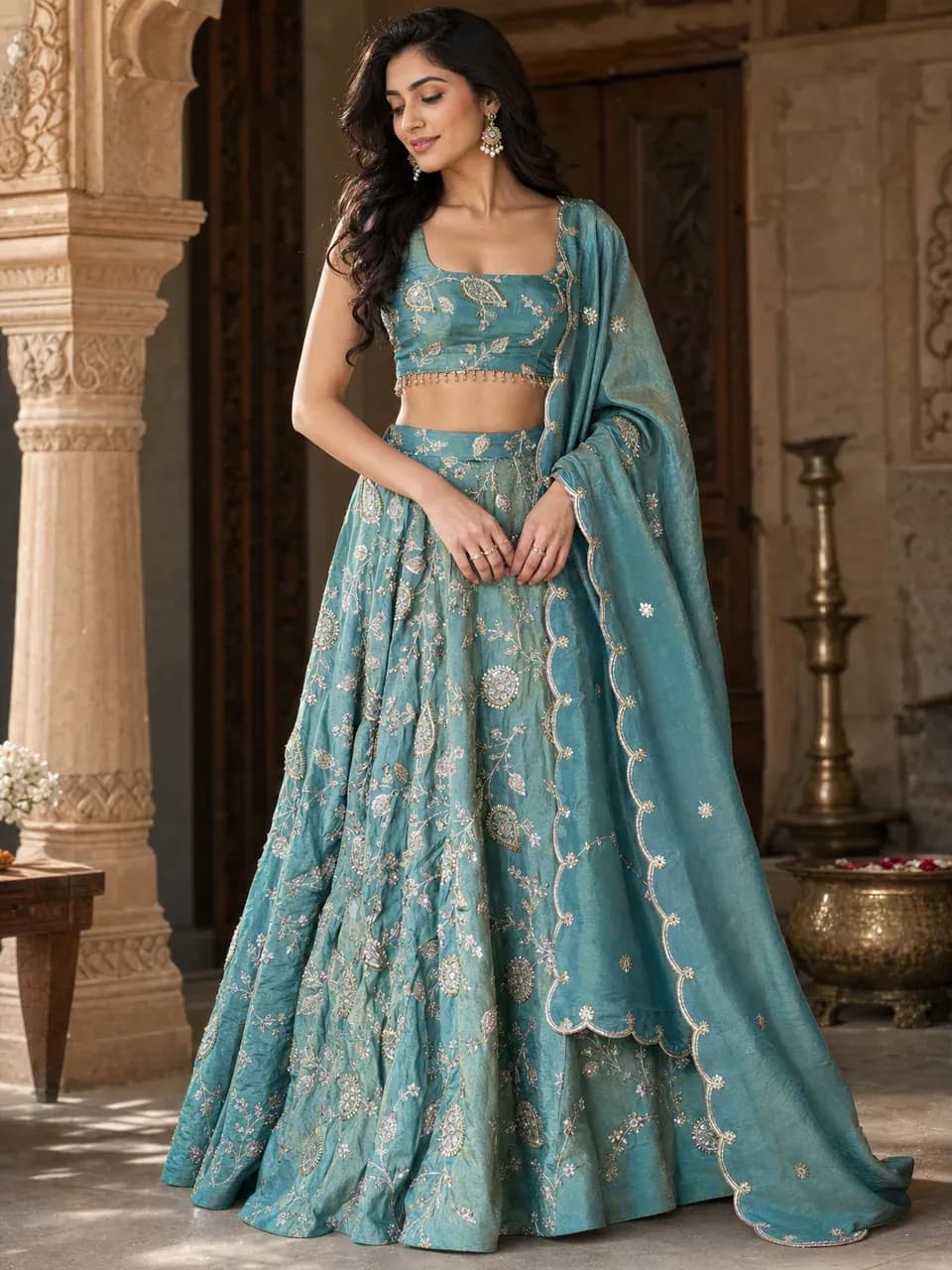
A saree is six yards of fabric whose appeal lives in how it falls. That makes it one of the few garments that genuinely cannot be sold from a flat-lay alone — a folded saree on a bed tells a buyer almost nothing about how the pleats sit or where the pallu lands.
It is also the largest category in Indian online ethnic retail. Women's ethnic wear — sarees, kurtis, lehengas and suits — has been reported as Meesho's single largest category at over 40% of GMV (EcomSarthi; Brand Chanakya, 2026), which means the listings you are competing against are numerous and, mostly, not very good.
The two things that decide whether a saree listing converts are drape and colour. Both are achievable on a phone.
What a saree listing needs to show
Missing any of these produces the same question in your WhatsApp inbox, over and over.
- Full drape
- The whole saree worn or draped on a stand, head to hem. This is the image that sells; a folded saree does not communicate fall.
- Pallu
- A dedicated frame of the pallu. It carries the heaviest work and is usually what a buyer is actually choosing between.
- Border
- A close frame of the border along its length, so the width and pattern repeat are visible.
- Zari / weave detail
- One close frame in raking side light. Zari read flat under direct front light and loses its metallic quality.
- Blouse piece
- Shown separately, and stated clearly as stitched or unstitched. This is the most common pre-purchase question on saree listings.
- True colour frame
- One frame under neutral daylight with no filter. Colour mismatch is a leading driver of apparel returns.
Apparel carries the highest return rate of any retail category in India — Coresight put fashion returns at 24.4% in 2023 — and colour and fall mismatches are among the most cited reasons. An accurate listing is cheaper than a return.
How it works with Dekhlo
Start from one real photo
Photograph the product as it actually is, on a phone, in whatever light you have. The source does not need a studio, a backdrop or a professional model — it needs to be a true record of the item you will ship.
Choose the look
Pick the aesthetic and add any art direction. The model, pose, backdrop and lighting are the parts free to change; the product's own design, colour and construction are held steady.
Compare against your original
Every generated image is shown next to the photo you uploaded, so you can reject anything that has drifted. Nothing is published automatically — you select what is accurate enough to sell.
Publish and share
Export the selected images, or publish them as a shareable product page with a WhatsApp enquiry button, so a buyer can go from the image to a conversation in one tap.
Questions sellers ask
How should I photograph a saree for online selling?
Show the full drape first, because fall is what a buyer is judging and a folded saree cannot convey it. Then add dedicated frames of the pallu, the border and the zari in side light. Finish with one unfiltered frame in daylight as the colour reference.
Do I need a model to photograph sarees?
A model communicates drape better than anything else, but a mannequin or a well-draped stand also works. What does not work is a flat-lay alone — it hides the one property, the fall of the fabric, that a buyer most wants to assess before ordering.
How do I photograph zari so it looks metallic?
Light it from the side rather than the front. Zari is reflective, so it needs a light source at an angle to produce the bright-and-dark contrast the eye reads as metallic. Front-on light, including on-camera flash, flattens it into dull thread.
Why do my saree colours look different from the real saree?
Usually mixed light — daylight combined with a room bulb — or a filter applied afterwards. Shoot under one kind of light, preferably daylight, and keep one unedited frame as your colour reference. Colour mismatch is among the most common causes of apparel returns.
Can one saree photo be turned into several catalogue images?
Yes. One accurate photo can be restaged into different settings and presentations while the saree itself — its colour, pattern, border and weave — is held unchanged. The scene around the garment is what varies; the garment is what the buyer is ordering.
Start from a photo you already have
Upload one real photo of the product and review the results against your original before anything is published. New studios start with 50 free credits.